
Integrated Soil Management: Innovative Practices for the Conservation of Soil Fertility
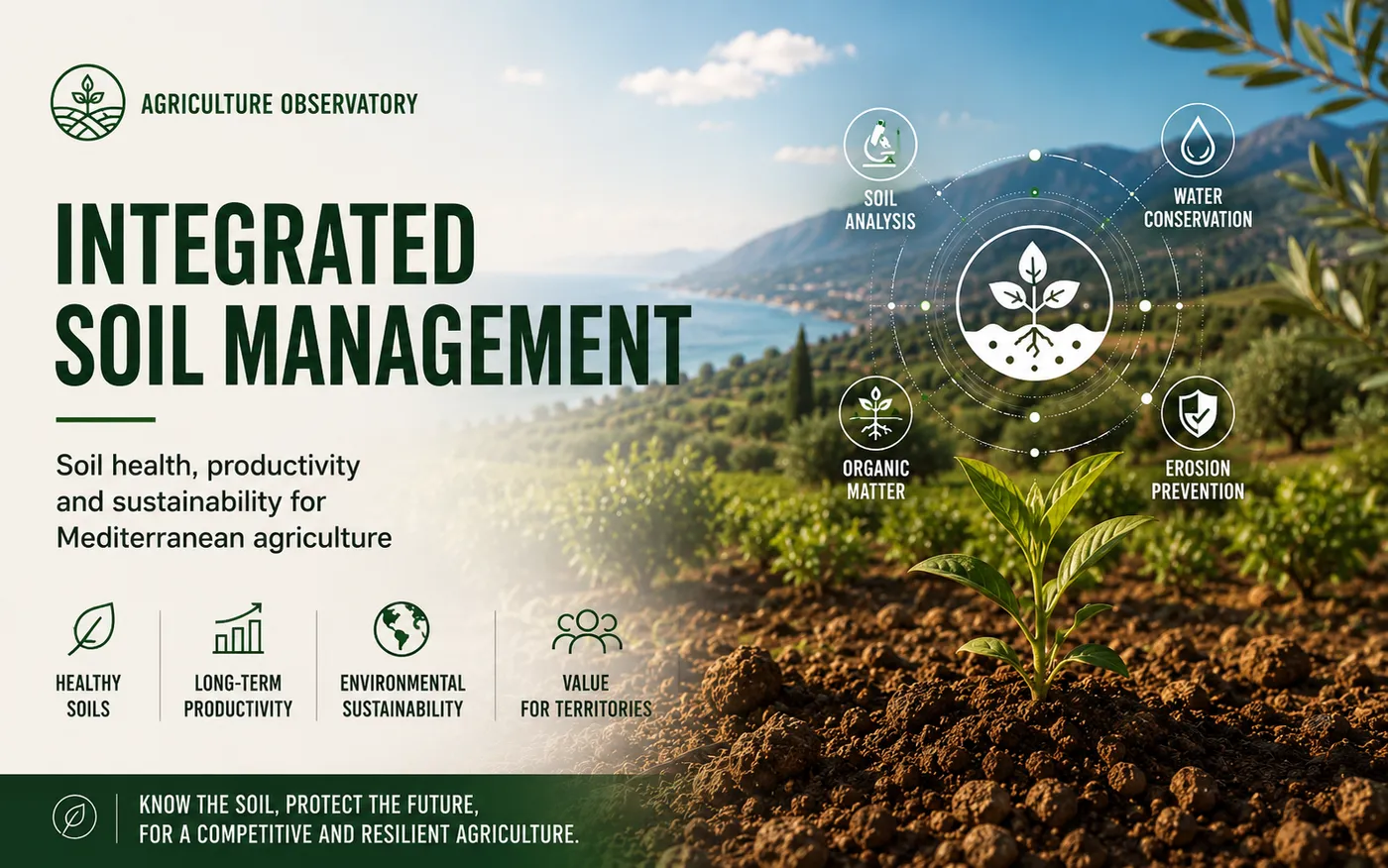
Soil represents one of the fundamental resources for the survival and development of human societies, forming the physical and biological foundation upon which agricultural systems are built. Despite this central role, soil has long been considered a virtually inexhaustible resource, a simple passive support for plant production. This reductive view has contributed, over recent decades, to a progressive degradation of agricultural soil quality, with significant implications for both productivity and ecosystem stability.
Scientific evidence indicates that a substantial proportion of soils globally show signs of degradation, driven by processes such as erosion, loss of organic matter, compaction, and contamination. In the European context, these phenomena are particularly significant in Mediterranean regions, where climatic conditions characterized by irregular rainfall and high temperatures increase soil vulnerability. In such contexts, soil fertility can no longer be regarded as a static property but must be understood as the dynamic result of complex interactions between natural factors and management practices.
Soil fertility is not limited to the availability of nutrients for plants; it encompasses a broader dimension that includes physical structure, water retention capacity, microbial biodiversity, and resilience to environmental stress. The progressive loss of organic matter, in particular, represents one of the most critical indicators of degradation, as it simultaneously affects multiple key processes, from water retention to nutrient availability. At the same time, the reduction of soil biodiversity undermines the ability of agroecosystems to self-regulate, increasing dependence on external inputs such as chemical fertilizers and pesticides.
In this context, the need for a paradigm shift in agricultural soil management is becoming increasingly evident. The conventional approach, based on intensive tillage and heavy reliance on chemical inputs, is proving to be progressively less sustainable in the long term, both environmentally and economically. In contrast, the concept of integrated soil management is gaining ground, aiming to optimize resource use through a combination of agronomic practices, technological innovation, and ecological knowledge.
Integrated soil management is based on the idea that soil should be treated as a complex living system, in which every agricultural intervention produces effects that propagate over time and space. This implies greater attention to the planning of cropping practices, diversification of crops, and reduction of invasive mechanical tillage. Techniques such as crop rotations, the use of cover crops, and the application of organic amendments are not merely sustainable alternatives but fundamental tools for restoring the ecological functions of the soil.
At the same time, the development of digital technologies opens new perspectives for more efficient and targeted resource management. Precision agriculture makes it possible to monitor soil conditions in real time, identifying spatial and temporal variations that can be managed through differentiated interventions. Sensors, satellite imagery, and predictive models allow for the optimization of water and nutrient use, reducing waste and minimizing environmental impacts. In this sense, technological innovation does not replace traditional agronomic practices but complements them, enhancing their effectiveness.
Another key element concerns the role of public policies and governance systems. At the European level, increasing attention to soil protection has translated into strategies and programs that encourage sustainable agricultural practices, recognizing soil not only as a production factor but as a common good. However, the effectiveness of these tools depends on the ability to adapt them to territorial specificities and to actively involve farmers in decision-making processes.
Ultimately, the conservation of soil fertility requires a systemic approach, in which ecological, economic, and social dimensions are considered in an integrated manner. Soil can no longer be managed solely for immediate production but must be preserved as natural capital, essential for ensuring food security and the long-term sustainability of ecosystems.
This pamphlet aims to provide an in-depth analysis of the main dynamics influencing the quality of agricultural soils and to present an updated overview of innovative practices available for their management. The objective is to offer a solid knowledge base to guide operational and policy decisions in a context characterized by increasing complexity and uncertainty.
Chapter 1 – Soil as a Living System
Soil is not a simple inert medium for plant growth, but a complex, dynamic, and highly organized living system in which physical, chemical, and biological components constantly interact. This perspective, now well established in scientific literature, represents the starting point for understanding why soil management can no longer be limited to a purely productive approach, but must necessarily include the conservation of its ecological functions (Brady & Weil, 2016).
From a physical perspective, soil consists of a solid matrix formed by mineral particles of different sizes—sand, silt, and clay—whose combination determines its texture. This structure directly influences fundamental properties such as porosity, water retention capacity, and air circulation. However, soil structure is not static: it evolves over time in response to agricultural practices, climatic agents, and biological activity. The formation of stable aggregates, for example, is essential to ensure proper aeration and water infiltration, reducing the risk of erosion and compaction (Six et al., 2004).
Alongside the physical component, soil also has an equally important chemical dimension. The availability of nutrients such as nitrogen, phosphorus, and potassium depends on complex equilibria between organic and inorganic forms, influenced by factors such as pH, cation exchange capacity, and the presence of organic matter. Organic matter plays a central role, acting as a reservoir of nutrients and contributing to soil structural stability. It functions as a natural binding agent, promoting aggregate formation and improving the soil’s capacity to retain water and nutrients (Lal, 2004).
The biological dimension is perhaps the most underestimated yet at the same time the most decisive aspect in defining soil as a living system. A single gram of soil can contain billions of microorganisms, including bacteria, fungi, protozoa, and nematodes, which perform essential functions in biogeochemical cycles. These organisms are responsible for the decomposition of organic matter, the mineralization of nutrients, and the formation of symbiotic relationships with plants, as in the case of mycorrhizae (Van der Heijden et al., 2008).
Interactions between roots and soil microorganisms constitute one of the key elements of soil fertility. Plants release a variety of organic compounds into the soil, known as root exudates, which nourish microbial communities. In return, microorganisms improve nutrient availability and enhance plant resistance to both biotic and abiotic stresses. This reciprocal exchange highlights that soil is not a passive environment, but an active ecosystem in which complex and interdependent relationships develop (Bardgett & van der Putten, 2014).
A crucial element linking the physical, chemical, and biological dimensions is soil organic carbon. It represents the primary energy source for microorganisms and plays a determining role in regulating the global carbon cycle. The loss of organic carbon, often caused by intensive agricultural practices, not only reduces soil fertility but also contributes to increased greenhouse gas emissions. Conversely, strategies aimed at increasing carbon storage in soil can improve agronomic quality and contribute to climate change mitigation (Smith et al., 2008).
Soil biodiversity is another key indicator of its health and functionality. Rich and diverse soil ecosystems tend to be more resilient to environmental stresses, such as drought or pathogen attacks. This resilience derives from the presence of a complex network of organisms performing complementary functions, ensuring greater system stability. In contrast, biological simplification—often associated with monocultures and intensive pesticide use—reduces the soil’s ability to self-regulate (Tsiafouli et al., 2015).
In the Mediterranean context, these dynamics take on particular relevance. Climatic conditions characterized by long periods of drought alternating with intense rainfall make soils especially vulnerable to degradation. In such contexts, the loss of structure and organic matter can occur rapidly, compromising productive capacity and increasing the risk of desertification. This further highlights the need to consider soil as a living system to be protected and regenerated, rather than a resource to be exploited.
Understanding soil as a living system also implies recognizing that every agricultural intervention has effects that extend beyond the short term. Deep tillage, for example, may temporarily improve seedbed preparation, but in the long run it tends to disrupt soil structure and reduce microbial biodiversity. Similarly, excessive use of chemical fertilizers may increase immediate nutrient availability, but alter biological and chemical balances, making the system more dependent on external inputs.
From this perspective, the transition toward integrated soil management requires a cultural shift even before a technical one. It involves adopting a systemic view in which soil is treated as a complex organism to be maintained in balance, rather than merely a means of production. This approach does not imply rejecting modern technologies, but integrating them into strategies that respect natural processes and enhance their potential.
Recognizing soil as a living system therefore provides the theoretical foundation for building more sustainable agricultural practices. Only by understanding the complexity of the interactions that characterize it is it possible to develop effective interventions to preserve soil fertility in the long term. In this sense, soil management becomes not only a technical issue, but a shared responsibility involving farmers, researchers, and policymakers in the protection of a resource essential for the future.
Chapter 2 – Causes and Dynamics of Soil Degradation
Soil degradation represents one of the main risk factors for the sustainability of contemporary agricultural systems. It is a complex and multifactorial process, manifested through the progressive loss of the soil’s physical, chemical, and biological functions. Understanding the causes and dynamics of this phenomenon is essential for identifying effective strategies for prevention and recovery, particularly in vulnerable contexts such as Mediterranean regions (FAO, 2015).
Among the most widespread degradation processes globally, soil erosion occupies a central role. It consists of the removal of the fertile topsoil, mainly due to the action of water and wind. Water erosion, in particular, is intensified by heavy and concentrated rainfall, which generates surface runoff and the transport of fine particles. This phenomenon is exacerbated by the lack of vegetation cover and by agricultural practices that leave the soil exposed, such as deep tillage or monocropping (Pimentel & Burgess, 2013).
Erosion does not only result in a quantitative loss of soil but also significantly affects its quality. The topsoil layer is the richest in organic matter and microorganisms, and its removal drastically reduces fertility and productive capacity. Furthermore, transported sediments can accumulate in waterways and reservoirs, contributing to pollution and the alteration of aquatic ecosystems (Montanarella et al., 2016).
Another significant process is soil compaction, primarily caused by the repeated passage of heavy agricultural machinery. Compaction reduces soil porosity, limiting air and water circulation and hindering root development. This leads to decreased infiltration capacity and increased surface runoff, thereby amplifying the risk of erosion. In addition, compacted soils exhibit reduced biological activity, as conditions become less favorable for microorganisms (Hamza & Anderson, 2005).
The loss of organic matter represents another key element in the degradation process. Organic matter plays essential roles in maintaining structural stability, chemical fertility, and biological activity in the soil. However, intensive agricultural practices, such as frequent tillage and limited return of crop residues, accelerate the mineralization of organic matter, progressively reducing its content. This process is particularly critical in warm climates, where higher temperatures promote faster decomposition (Lal, 2004).
Salinization is a widespread issue, particularly in arid and semi-arid regions, where intensive irrigation combined with inadequate drainage leads to the accumulation of salts in the soil. Excessive salinity compromises the ability of plants to absorb water and nutrients, causing physiological stress and reduced yields. In Mediterranean contexts, this phenomenon can be exacerbated by the use of low-quality irrigation water and by seawater intrusion into coastal aquifers (Rengasamy, 2006).
Another factor contributing to soil degradation is chemical contamination, resulting from the excessive or improper use of fertilizers, pesticides, and other agricultural inputs. These substances can accumulate in the soil, altering chemical and biological balances and posing risks to both human health and the environment. Contamination can also reduce soil biodiversity, thereby compromising essential ecosystem functions (Alloway, 2013).
The dynamics of soil degradation are closely interconnected and often reinforce one another. For example, the loss of organic matter makes soil more vulnerable to erosion, while compaction can increase runoff and accelerate the loss of fine particles. This systemic nature of degradation makes it difficult to address a single factor without considering the entire system.
Climate change introduces additional layers of complexity. The increasing frequency of extreme events, such as intense rainfall and prolonged droughts, amplifies degradation processes. Heavy rainfall promotes erosion, while drought reduces vegetation cover and soil stability. Furthermore, rising temperatures accelerate the decomposition of organic matter, contributing to carbon loss (IPCC, 2021).
In the Mediterranean context, these dynamics are particularly pronounced. The combination of climatic, geomorphological, and anthropogenic factors makes soils in these regions among the most vulnerable in Europe. The abandonment of traditional practices, such as terracing and integrated water management, has further increased the risk of degradation, highlighting the importance of recovering local knowledge and integrating it with modern innovations.
An often overlooked aspect concerns the socio-economic dimension of soil degradation. Economic pressures may push farmers toward short-term practices aimed at maximizing yields, often at the expense of long-term sustainability. The lack of adequate incentives and technical support can hinder the adoption of conservation practices, perpetuating a cycle of degradation that is difficult to break (Pretty & Bharucha, 2014).
Understanding the causes of soil degradation therefore requires recognizing its multidimensional nature. It is not only a matter of biophysical processes, but of a complex system in which environmental, technological, and economic factors interact. This awareness is essential for developing integrated management strategies capable of addressing multiple components of degradation simultaneously.
In conclusion, soil degradation is not an inevitable phenomenon, but the result of specific management choices and environmental conditions. Identifying its causes and dynamics is the first step toward reversing current trends and promoting more resilient agricultural systems. Only through a systemic and integrated approach will it be possible to preserve soil fertility and ensure the long-term sustainability of agricultural production.
Chapter 3 – Regenerative Agronomic Practices
Growing awareness of the limitations of conventional agricultural models has led to the development and dissemination of regenerative agronomic practices, aimed not only at conservation but at the active improvement of soil quality. These practices are based on ecological principles and seek to restore the natural processes that sustain soil fertility, while reducing dependence on external inputs (Gattinger et al., 2012).
One of the pillars of regenerative practices is crop rotation. Diversifying crops over time helps break pest and disease cycles, improve soil structure, and optimize nutrient use. Different crops have varying nutrient requirements and root systems, which contribute to a more balanced use of soil resources. The inclusion of legumes in rotations, in particular, enriches the soil with nitrogen through biological fixation, reducing the need for synthetic fertilizers (Drinkwater et al., 1998).
Alongside rotations, cover crops play a fundamental role. These crops, grown during periods when the soil would otherwise remain bare, perform multiple functions: they protect the soil from erosion, improve structure, increase organic matter content, and promote microbial biodiversity. In addition, some species can help control weeds and mobilize nutrients, making them more available for subsequent crops (Blanco-Canqui et al., 2015).
Reducing soil disturbance is another key component of regenerative practices. Techniques such as minimum tillage or no-tillage limit mechanical disruption, preserving soil structure and biological communities. Intensive tillage tends to break down soil aggregates and expose organic matter to decomposition, accelerating its loss. In contrast, reduced tillage promotes the accumulation of soil organic carbon and enhances long-term system stability (Hobbs et al., 2008).
The application of organic amendments, such as compost and manure, is another effective strategy for restoring soil fertility. These materials not only supply nutrients but also improve physical structure and stimulate biological activity. Compost, in particular, provides a stable source of organic matter, enhancing water retention capacity and long-term nutrient availability. The use of local organic residues also helps close nutrient cycles, reducing waste and improving overall system efficiency (Diacono & Montemurro, 2010).
Agroforestry represents one of the most integrated and complex strategies within regenerative practices. It involves the combination of trees and crops within the same production system, creating synergies between different components. Trees improve soil structure through deep root systems, enhance biodiversity, and contribute to microclimatic stability. Their presence can also reduce erosion and improve water management, making agricultural systems more resilient to climatic stress (Jose, 2009).
A central aspect of regenerative practices is the management of soil biodiversity. Promoting diverse and active microbial communities enhances processes such as decomposition, nutrient cycling, and aggregate formation. Reduced use of pesticides and chemical fertilizers, combined with practices that increase organic matter, creates favorable conditions for this biodiversity. In this perspective, soil fertility is understood as an emergent property of the system, rather than the result of external nutrient inputs (Bender et al., 2016).
In Mediterranean contexts, the application of regenerative practices requires adaptation to specific climatic conditions. Soil cover management, for instance, becomes crucial in reducing evaporation and conserving moisture during dry periods. At the same time, the selection of species for cover crops and rotations must take into account water availability and local soil characteristics. The integration of traditional knowledge, such as intercropping and water management practices, can provide significant added value.
Regenerative practices should not be viewed as isolated techniques, but as part of a systemic approach to soil management. Their effectiveness depends on the ability to combine them coherently, taking into account the specific characteristics of each production context. For example, the introduction of cover crops can be particularly effective when combined with reduced tillage and adequate organic matter inputs.
Another important dimension concerns economic and managerial aspects. While some regenerative practices may require initial investments or changes in operational habits, in the long term they tend to reduce costs associated with external inputs and improve yield stability. Moreover, growing consumer demand for sustainable products can create new market opportunities for farmers adopting these approaches (Reganold & Wachter, 2016).
The transition toward regenerative agronomic practices therefore represents a concrete response to the challenges posed by soil degradation and climate change. It requires a rethinking of agricultural management approaches, based on a greater integration of scientific knowledge and traditional practices. In this context, education and technical advisory services play a fundamental role in supporting farmers throughout the transition process.
In conclusion, regenerative practices offer a set of effective tools for improving soil fertility and the sustainability of agricultural systems. However, their large-scale adoption requires a coordinated approach involving not only farmers, but also institutions, researchers, and other stakeholders within the supply chain. Only through such collaboration will it be possible to build resilient agricultural systems capable of addressing future challenges while ensuring the conservation of natural resources.
Chapter 4 – Technological Innovation and Precision Agriculture
The evolution of digital technologies has introduced new possibilities in the management of agricultural systems, paving the way for a more precise, efficient, and adaptive approach to resource use. In this context, precision agriculture represents one of the most significant developments, enabling a shift from uniform field management to site-specific interventions tailored to the actual conditions of soil and crops (Zhang et al., 2002).
At the core of precision agriculture lies the recognition of spatial and temporal variability within agricultural systems. Even within a single field, significant differences may exist in terms of soil texture, nutrient content, moisture levels, and biological activity. The traditional approach, based on uniform application of inputs such as water and fertilizers, fails to account for this heterogeneity, leading to inefficiencies and potential environmental impacts. Precision agriculture, by contrast, aims to identify and manage these differences in a targeted manner (McBratney et al., 2005).
One of the key tools for implementing this approach is the use of soil sensors. These devices enable the monitoring of critical parameters such as moisture, temperature, electrical conductivity, and, in some cases, nutrient availability. The data collected can be transmitted in real time and integrated into decision support systems, allowing farmers to act promptly and accurately. For instance, irrigation can be applied only where it is actually needed, reducing waste and improving water-use efficiency (Jones et al., 2004).
Remote sensing technologies, based on satellite imagery or drones, represent another essential component. Through the analysis of vegetation indices such as NDVI (Normalized Difference Vegetation Index), it is possible to assess crop health and detect stress related to nutrient or water deficiencies. Combined with soil data, this information enables the creation of variability maps that guide the differential application of inputs (Mulla, 2013).
Data integration is both one of the most critical and most promising aspects of precision agriculture. Geographic Information Systems (GIS) and digital platforms allow the combination of data from multiple sources, creating a detailed and dynamic representation of agricultural systems. On this basis, predictive models and artificial intelligence algorithms can support management decisions, optimizing resource use and improving production performance (Wolfert et al., 2017).
A particularly relevant application concerns fertilizer management. The use of Variable Rate Technology (VRT) allows for the adjustment of nutrient application according to the specific needs of different areas within a field. This approach not only improves nutrient-use efficiency but also reduces the risk of losses through leaching or volatilization, contributing to water protection and emission reduction (Gebbers & Adamchuk, 2010).
Similarly, irrigation management can benefit from advanced systems based on real-time data and predictive models. Precision irrigation allows water volumes and timing to be adapted to the actual needs of crops, taking into account climatic conditions and soil characteristics. In Mediterranean contexts, where water scarcity is a major constraint, these technologies can significantly enhance the sustainability of agricultural systems.
Despite its numerous advantages, the adoption of precision agriculture also presents challenges. High initial investment costs, technological complexity, and the need for specialized skills can represent significant barriers, particularly for small-scale farms. Moreover, data management and interpretation require adequate technical support; without it, the full potential of these technologies may not be realized (Lowenberg-DeBoer & Erickson, 2019).
Another important issue concerns data ownership and access. Digital platforms used in agriculture generate large volumes of data, raising questions related to privacy, security, and control. Ensuring fair and transparent data use represents a critical challenge for the future of digital agriculture.
Within the framework of integrated soil management, technological innovation must be understood as a complementary tool to sustainable agronomic practices. Precision technologies can enhance the effectiveness of interventions such as crop rotations or organic amendments, but they cannot replace the ecological processes that underpin soil fertility. A purely technological approach, lacking a systemic perspective, risks reproducing the same limitations of conventional models.
In Mediterranean contexts, the integration of technological innovation with local knowledge is particularly important. Technologies must be adapted to environmental and socio-economic conditions, taking into account farm size and available resources. In this regard, participatory innovation models, involving farmers directly in the development and adaptation of technologies, can represent an effective strategy.
Precision agriculture offers advanced tools to improve soil and resource management, contributing to the sustainability and resilience of production systems. However, its success depends on its integration within a broader framework of sustainable management, where technologies support rather than replace natural processes. Only through such integration can the full potential of innovation be realized for the conservation of soil fertility.
Chapter 5 – European Policies and Soil Governance Models
Sustainable soil management does not depend solely on technical decisions made at the farm level, but is strongly influenced by regulatory frameworks and public policies that guide agricultural practices. At the European level, increasing attention to soil protection has resulted in a structured set of strategies, programs, and financial instruments aimed at promoting more sustainable and resilient agricultural models (European Commission, 2021).
One of the main pillars of this system is the Common Agricultural Policy (CAP), which has progressively incorporated environmental objectives alongside productive ones through successive reforms. Recent developments within the CAP introduce instruments such as eco-schemes, which incentivize farmers to adopt practices beneficial for soil conservation, including permanent soil cover, reduced tillage, and increased biodiversity (Pe’er et al., 2020).
At the same time, the European Soil Strategy, within the broader framework of the Green Deal, explicitly recognizes soil as a non-renewable resource on a human timescale and promotes its protection through specific targets. These include reducing soil degradation, increasing soil organic carbon content, and combating processes such as erosion and desertification. The strategy also highlights the role of soil in climate change mitigation, emphasizing the need to integrate it into environmental and agricultural policies (European Commission, 2020).
Another important element is the “Farm to Fork” strategy, which aims to make food systems more sustainable across the entire supply chain. This initiative sets concrete targets, such as reducing the use of chemical pesticides and fertilizers, which have a direct impact on soil quality. The promotion of organic farming and agroecological practices represents an additional tool for improving soil management and reducing pressure on ecosystems (European Commission, 2020).
Beyond regulatory frameworks, the European Union provides financial support through programs such as Rural Development Plans (RDPs), which facilitate the adoption of sustainable practices at the local level. These programs fund specific interventions, including conservation agriculture techniques, sustainable water management, and the restoration of degraded areas. The flexibility of RDPs allows measures to be adapted to local needs, making them a particularly effective instrument (OECD, 2020).
However, the effectiveness of European policies depends largely on their implementation at national and regional levels. Differences among agricultural systems, pedoclimatic conditions, and economic structures make it necessary to adapt policies to local specificities. In some cases, bureaucratic complexity and fragmented instruments can hinder the adoption of sustainable practices, limiting the impact of the policies themselves (Matthews, 2013).
A central aspect of soil governance concerns the involvement of local actors, particularly farmers. The transition toward sustainable models requires not only economic incentives, but also a cultural shift and access to appropriate knowledge and skills. In this sense, agricultural advisory services and training programs play a fundamental role in facilitating the adoption of innovative practices (Ingram & Mills, 2019).
Soil governance also requires the coordination of different policies, which often operate across different levels and sectors. Agricultural, environmental, climate, and territorial policies must be integrated in order to avoid conflicts and maximize synergies. For example, measures aimed at increasing agricultural productivity may conflict with conservation objectives if they are not properly designed. An integrated approach, by contrast, makes it possible to reconcile production needs with the protection of natural resources.
In the Mediterranean context, these challenges are particularly evident. Soil vulnerability, combined with economic and climatic pressures, requires targeted and flexible policies. The recovery of traditional practices, such as terracing and integrated water management, can be encouraged through specific instruments, while also enhancing cultural and landscape heritage. The integration of innovation and tradition represents a strategic lever for improving the resilience of agricultural systems.
Another important element concerns policy monitoring and evaluation. The availability of reliable and updated data is essential for measuring the effectiveness of interventions and guiding future decisions. In this context, digital technologies and soil observation systems can help improve the quality of information and support more informed and transparent governance.
Despite the progress made, some gaps remain in the European regulatory framework. Unlike other natural resources, such as water and air, soil is not yet covered by a binding framework directive at EU level. This limits the ability to address soil degradation issues in a uniform way and makes greater policy harmonization necessary (Montanarella & Panagos, 2021).
In conclusion, European policies represent a fundamental element in guiding soil management toward more sustainable models. However, their success depends on the ability to integrate them into an effective governance system that takes local specificities into account and actively involves territorial actors. Only through a coordinated and multilevel approach will it be possible to ensure the conservation of soil fertility and the long-term sustainability of agricultural systems.
Chapter 6 – Future Perspectives and the Resilience of Agricultural Systems
Looking toward the future of soil management means, first of all, recognizing that we are in a phase of transition. The agricultural models that have dominated recent decades are showing clear limitations, especially in terms of environmental sustainability and capacity to adapt to climate change. In this context, the concept of resilience becomes central: it is no longer simply a matter of producing, but of doing so consistently over time, while maintaining soil functionality even under stressful conditions (Folke et al., 2010).
The resilience of agricultural systems is closely linked to soil health. Soil that is rich in organic matter, biologically active, and structurally stable is better able to respond to external shocks, such as prolonged droughts or intense rainfall events. By contrast, degraded soils tend to lose their productive capacity rapidly, making agricultural systems more vulnerable and less predictable. In this sense, soil management represents one of the most important levers for building resilient agricultural systems (Lal, 2020).
In the near future, the integration of traditional practices and technological innovation will be one of the key elements. Knowledge developed over centuries, especially in Mediterranean contexts, offers concrete examples of adaptation to difficult environmental conditions. Techniques such as terracing, rainwater management, and crop diversification are not merely remnants of the past, but still-relevant tools that can be strengthened through the use of modern technologies.
Innovation, in fact, should not be interpreted as a break from the past, but as a process of integration. Digital technologies, monitoring systems, and artificial intelligence can improve the precision and efficiency of agricultural practices, but their effectiveness depends on their ability to fit within a coherent ecological framework. A resilient agricultural system is, by definition, a balanced system in which technology and nature operate in synergy.
Another fundamental aspect concerns the role of scientific research. In recent years, attention to soil has grown significantly, leading to the development of new knowledge and tools. However, the main challenge is not only to produce innovation, but to transfer it effectively to farmers. The gap between research and practice remains a significant limitation, which can be overcome through closer collaboration models among universities, research centers, and sector operators (Pretty, 2018).
Training therefore assumes a strategic role. Farmers are no longer simply executors of practices, but managers of complex systems that require technical, ecological, and digital skills. Investing in training means providing the tools needed to make informed decisions, adapt to change, and test new solutions. In this sense, knowledge becomes a resource as important as the soil itself.
Another element concerns the economic dimension of resilience. Sustainable agricultural systems must also be economically viable. This implies the need to develop market models that value sustainable practices and recognize their contribution to the protection of natural resources. Growing consumer attention to sustainability represents an opportunity, but it requires transparency, traceability, and reliable certification systems (Reganold & Wachter, 2016).
In the context of climate change, adaptation becomes a priority. Projections indicate an increase in climate variability, with more frequent and intense extreme events. In this scenario, the adaptive capacity of agricultural systems will depend largely on soil quality. Practices that improve structure, increase organic matter, and promote biodiversity help make systems more flexible and less vulnerable.
Water management represents a critical issue, especially in Mediterranean regions. Water scarcity, combined with irregular rainfall distribution, requires integrated strategies that include soil moisture conservation, efficient irrigation use, and water recovery. Here too, the integration of traditional practices and modern technologies can offer effective solutions.
An emerging theme concerns the role of soil in climate change mitigation. Agricultural soils represent one of the main carbon reservoirs at the global level, and their management can contribute significantly to reducing greenhouse gas emissions. Strategies aimed at increasing organic carbon, such as the use of cover crops and reduced tillage, can transform soil from a carbon source into a carbon sink (Smith et al., 2008).
The resilience of agricultural systems, however, is not only a technical or environmental issue, but also a social one. Rural communities play a fundamental role in land management, and their adaptive capacity directly influences the sustainability of agricultural systems. Strengthening these communities through support policies and local development means investing in the overall resilience of the system.
Looking ahead, it becomes clear that there is no single or universal solution. The diversity of agricultural contexts requires flexible approaches capable of adapting to local specificities. Nevertheless, some fundamental principles can be identified: conservation of organic matter, promotion of biodiversity, reduction of external inputs, and integration between traditional knowledge and innovation.
In conclusion, the future of soil management depends on the ability to adopt a long-term vision in which fertility is not considered an immediate objective, but a process to be built and maintained over time. The resilience of agricultural systems is the result of this approach, a condition that cannot be achieved through individual practices alone, but through a dynamic balance between environment, economy, and society. Within this balance, soil assumes a central role, not only as a productive resource, but as the foundation of sustainability.
Conclusion
Integrated soil management emerges, in the current context, as a structural necessity rather than a technical option. The evidence analyzed in the previous chapters converges on one key point: agricultural fertility can no longer be sustained through linear and intensive approaches, but requires a systemic vision capable of integrating ecological, technological, and economic dimensions in a dynamic balance (Lal, 2004).
Soil, understood as a living system, represents the foundation of this balance. Its physical, chemical, and biological components operate interdependently, and every management intervention produces effects that are reflected across the entire system. The loss of this complexity, as observed in degradation processes, leads to reduced resilience and increased dependence on external inputs. By contrast, restoring the ecological functions of the soil makes it possible to build more stable and adaptive agricultural systems (Brady & Weil, 2016).
Regenerative agronomic practices represent concrete tools for reversing degradation dynamics. Crop rotations, cover crops, reduced tillage, and organic matter inputs are not isolated interventions, but elements of an integrated approach aimed at restoring the natural processes of the soil. Their effectiveness, however, depends on the ability to adapt them to specific contexts, taking into account pedoclimatic conditions and production needs (Gattinger et al., 2012).
At the same time, technological innovation offers significant opportunities to improve efficiency and precision in resource management. Precision agriculture makes it possible to recognize and manage soil variability, optimizing the use of water and nutrients. However, technologies must be integrated into a broader ecological vision, avoiding the replacement of natural processes with purely technical solutions (Wolfert et al., 2017).
The role of public policies remains decisive in guiding this transition. Instruments developed at the European level, from the Common Agricultural Policy to environmental strategies, create a favorable framework for the adoption of sustainable practices. However, the effectiveness of these instruments depends on their concrete implementation and on the ability to actively involve farmers, overcoming economic and cultural barriers (European Commission, 2021).
Future perspectives indicate that the resilience of agricultural systems will be increasingly linked to soil quality. In a context characterized by climate change and growing pressure on natural resources, the capacity to maintain fertility over time represents a strategic element for food security. Soil cannot be considered a renewable resource on a short timescale, and its management therefore requires long-term planning (IPCC, 2021).
A cross-cutting element that emerges is the need for integration: integration between traditional practices and technological innovation, between policies and local actions, and between scientific knowledge and farmers’ experience. This integrated approach not only improves the effectiveness of interventions but also helps build systems that are more flexible and adaptable to future conditions.
The economic and social dimensions complete this framework. Soil sustainability cannot be separated from the sustainability of agricultural systems as a whole. Production models that value quality, traceability, and sustainability can offer concrete opportunities for farmers, encouraging the adoption of virtuous practices. At the same time, strengthening rural communities represents a key element in ensuring the continuity of sustainable management practices (Pretty & Bharucha, 2014).
In summary, integrated soil management requires a paradigm shift. It is not simply a matter of increasing production in the short term, but of preserving and improving productive capacity over the long term. This implies a shared responsibility among all actors involved, from the local to the global scale.
Soil, often invisible in decision-making processes, assumes strategic centrality in this context. Its conservation is not only an agricultural issue, but a necessary condition for environmental, economic, and social sustainability. Recognizing this role means laying the foundations for an agricultural system capable of addressing future challenges while maintaining the balance of ecosystems.
- Alloway, B. J. (2013). Heavy metals in soils: Trace metals and metalloids in soils and their bioavailability. Springer.
- Bardgett, R. D., & van der Putten, W. H. (2014). Belowground biodiversity and ecosystem functioning. Nature, 515, 505–511.
- Bender, S. F., Wagg, C., & van der Heijden, M. G. A. (2016). An underground revolution: Biodiversity and soil ecological engineering for agricultural sustainability. Trends in Ecology & Evolution, 31(6), 440–452.
Blanco-Canqui, H., Shaver, T. M., Lindquist, J. L., Shapiro, C. A., Elmore, R. W., Francis, C. A., & Hergert, G. W. (2015). Cover crops and ecosystem services. Agronomy Journal, 107(6), 2449–2474.
- Brady, N. C., & Weil, R. R. (2016). The nature and properties of soils. Pearson.
- Diacono, M., & Montemurro, F. (2010). Long-term effects of organic amendments on soil fertility. Agronomy for Sustainable Development, 30, 401–422.
- Drinkwater, L. E., Wagoner, P., & Sarrantonio, M. (1998). Legume-based cropping systems. Nature, 396, 262–265.
European Commission (2020). Farm to Fork Strategy. European Union.
European Commission (2020). EU Soil Strategy for 2030. European Union.
European Commission (2021). Common Agricultural Policy 2023–2027. European Union.
FAO (2015). Status of the World’s Soil Resources. Food and Agriculture Organization.
- Folke, C., Carpenter, S. R., Walker, B., Scheffer, M., Chapin, T., & Rockström, J. (2010). Resilience thinking. Ecology and Society, 15(4).
- Gebbers, R., & Adamchuk, V. I. (2010). Precision agriculture. Computers and Electronics in Agriculture, 74(1), 1–2.
- Gattinger, A., Muller, A., Haeni, M., et al. (2012). Enhanced top soil carbon stocks. Proceedings of the National Academy of Sciences, 109(44), 18226–18231.
- Hamza, M. A., & Anderson, W. K. (2005). Soil compaction in cropping systems. Soil and Tillage Research, 82(2), 121–145.
- Hobbs, P. R., Sayre, K., & Gupta, R. (2008). Conservation agriculture. Philosophical Transactions of the Royal Society B, 363, 543–555.
- Ingram, J., & Mills, J. (2019). Agricultural knowledge systems. Journal of Agricultural Education and Extension, 25(1), 1–7.
IPCC (2021). Climate Change 2021: The Physical Science Basis. Intergovernmental Panel on Climate Change.
- Jose, S. (2009). Agroforestry for ecosystem services. Agroforestry Systems, 76, 1–10.
- Jones, H. G., Serraj, R., Loveys, B. R., et al. (2004). Thermal infrared imaging. Journal of Experimental Botany, 55(407), 2427–2436.
- Lal, R. (2004). Soil carbon sequestration impacts. Science, 304, 1623–1627.
- Lal, R. (2020). Soil health and climate change. Soil Security, 1, 100002.
- Lowenberg-DeBoer, J., & Erickson, B. (2019). Setting the record straight on precision agriculture adoption. Agronomy Journal, 111(4), 1552–1569.
- Matthews, A. (2013). Greening agricultural payments. Bio-based and Applied Economics, 2(1), 1–27.
- McBratney, A., Whelan, B., Ancev, T., & Bouma, J. (2005). Future directions of precision agriculture. Precision Agriculture, 6, 7–23.
- Montanarella, L., & Panagos, P. (2021). The relevance of sustainable soil management. Land Use Policy, 100, 104950.
- Montanarella, L., Pennock, D. J., McKenzie, N., et al. (2016). World’s soils are under threat. SOIL, 2, 79–82.
- Mulla, D. J. (2013). Twenty five years of remote sensing. Remote Sensing of Environment, 136, 1–11.
OECD (2020). Agricultural Policy Monitoring and Evaluation. OECD Publishing.
Pe’er, G., Bonn, A., Bruelheide, H., et al. (2020). Action needed for the EU Common Agricultural Policy. Science, 367(6475), 449–451.
- Pimentel, D., & Burgess, M. (2013). Soil erosion threatens food production. Agriculture, 3(3), 443–463.
- Pretty, J., & Bharucha, Z. P. (2014). Sustainable intensification. Annals of Botany, 114(8), 1571–1596.
- Pretty, J. (2018). Intensification for redesigned and sustainable agricultural systems. Science, 362(6417).
- Reganold, J. P., & Wachter, J. M. (2016). Organic agriculture in the twenty-first century. Nature Plants, 2, 15221.
- Rengasamy, P. (2006). World salinization. Journal of Experimental Botany, 57(5), 1017–1023.
- Six, J., Bossuyt, H., Degryze, S., & Denef, K. (2004). A history of research on soil aggregation. Soil and Tillage Research, 79(1), 7–31.
- Smith, P., Martino, D., Cai, Z., et al. (2008). Greenhouse gas mitigation in agriculture. Philosophical Transactions of the Royal Society B, 363, 789–813.
- Tsiafouli, M. A., Thébault, E., Sgardelis, S. P., et al. (2015). Intensive agriculture reduces soil biodiversity. Global Change Biology, 21(2), 973–985.
- Van der Heijden, M. G. A., Bardgett, R. D., & van Straalen, N. M. (2008). The unseen majority. Ecology Letters, 11, 296–310.
- Wolfert, S., Ge, L., Verdouw, C., & Bogaardt, M. J. (2017). Big data in smart farming. Agricultural Systems, 153, 69–80.
- Zhang, N., Wang, M., & Wang, N. (2002). Precision agriculture. Computers and Electronics in Agriculture, 36(2–3), 113–132.