
Biodiversity and Tradition: The Role of Historical Agricultural Practices in the Resilience of Rural Landscapes
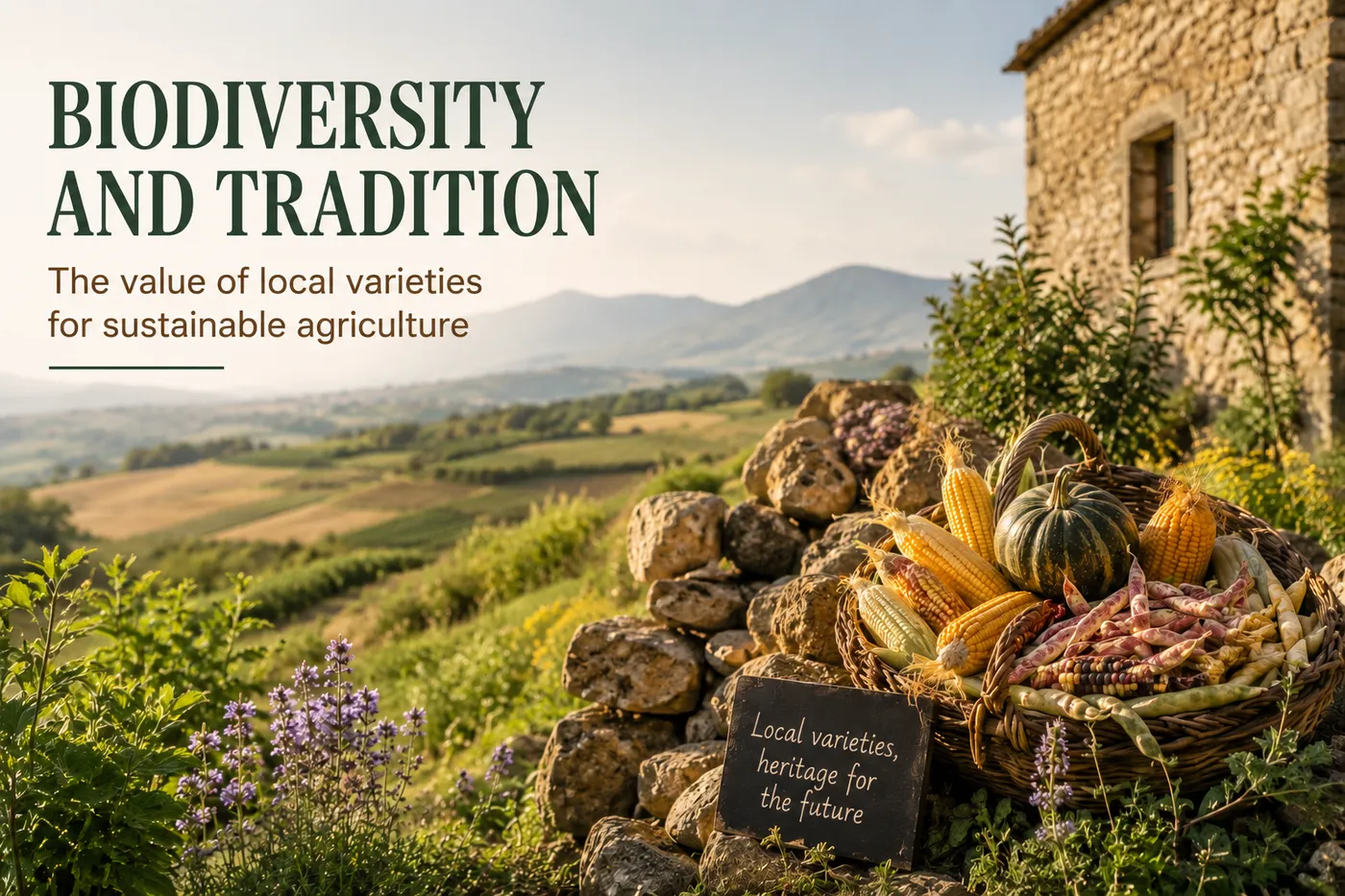
In recent decades, the debate on sustainable agriculture has focused primarily on technological innovation, digitalization, and precision farming. However, alongside sensors, algorithms, and predictive models, there exists a less visible yet equally strategic heritage: the body of historical agricultural practices that have shaped Mediterranean rural landscapes for centuries. In Sicily, as in many areas of Southern Europe, agricultural biodiversity is not the result of chance, but the outcome of a balance built over time among people, soil, climate, and community.
This work explores the role of traditional practices in building the ecological, economic, and social resilience of rural territories. The objective is neither to idealize the past nor to propose a nostalgic return to pre-industrial production models, but to critically and systematically analyze how certain historical solutions may represent concrete tools for adapting to climate change and contemporary market pressures.
The Mediterranean agricultural landscape is a complex system characterized by strong heterogeneity: small plots, mixed cropping systems, terracing, dry-stone walls, tree-lined fields, and agro-silvo-pastoral systems. This structural fragmentation has generated, over time, a high level of biological diversity, both at the genetic level (local varieties) and at the ecosystem level (interaction among crops, insects, soil, and wildlife).
The resilience of these systems does not derive from a single element, but from their internal diversity. Where multiple crops, varieties, and micro-habitats coexist, risk is distributed. A prolonged drought may compromise one crop but not the entire system; a pest may affect one variety but not all. Biodiversity functions as a biological safety net.
Historical agricultural practices are not merely habits passed down through inertia. They represent forms of embedded ecological knowledge, developed through observation, empirical experimentation, and intergenerational adaptation. The farmer who alternated cereals and legumes was not applying an academic theory of nitrogen fixation, but had empirically understood that such rotation maintained soil fertility. The winegrower who preserved trees along field boundaries was not referring to ecological corridors, but knew that those plants protected crops from wind and favored the presence of beneficial insects.
Biodiversity is not merely an ecological indicator. It is also an element of identity and culture. Local varieties of wheat, olive trees, citrus fruits, or legumes tell stories of adaptation to specific soil and climatic conditions. Each traditional cultivar represents a genetic archive built over time. The loss of agricultural biodiversity implies a reduction of future options. In a context of climate change, the availability of a broad genetic heritage increases the possibility of selecting varieties more resistant to water stress, salinity, or emerging plant diseases.
An elderly farmer who preserves the seeds of a local variety is not simply maintaining a family tradition; he is safeguarding a strategic resource for the entire agri-food system. Historical Mediterranean practices were often characterized by productive diversification: multiple crops, integration between agriculture and livestock, and on-farm production of inputs. This model reduced dependence on external markets and industrial chemical inputs. A farm that produces cereals, vegetables, and olive oil, and integrates agritourism activities or local processing, is less vulnerable than a highly specialized monoculture.
The contemporary challenge does not lie in choosing between traditional and technological agriculture, but in integrating historical knowledge with innovative tools. The resilience of Mediterranean rural landscapes requires a systemic approach that recognizes the value of historical practices as existing ecological infrastructures.
Chapter 1 – Mediterranean Rural Landscape as a Living and Resilient System
The Mediterranean rural landscape is not a simple geographical setting. It is a living organism, layered over time, where every element—soil, water, crops, infrastructure, and community—contributes to a dynamic balance. In Sicily, this complexity is visible even to an attentive observer: centuries-old olive groves coexist with vineyards, citrus orchards bordered by dry-stone walls, wheat fields interrupted by rows of almond trees, pastures alternating with cultivated surfaces.
This configuration is neither accidental nor solely the result of modern planning. It is the outcome of centuries of gradual adaptation to Mediterranean climatic conditions, characterized by long, arid summers, irregular rainfall, and often fragile soils. In such a context, the survival of rural communities required solutions capable of reducing risk, distributing losses, and optimizing available resources.
One of the most distinctive aspects of the traditional Mediterranean landscape is its mosaic structure. Small diversified plots, the alternation of annual and perennial crops, and the presence of linear elements such as hedgerows, tree lines, and stone walls create a spatial complexity that performs precise ecological functions. Fragmentation, often perceived as a limitation from the perspective of intensive agriculture, actually represents a diffuse ecological infrastructure. Dry-stone walls do not merely delimit fields: they create micro-habitats for insects, reptiles, and beneficial microorganisms. Hedgerows function as ecological corridors, facilitating wildlife mobility and contributing to the natural regulation of pests. Resilience emerges from complexity.
In the Mediterranean context, water represents the critical variable. Historical agricultural practices developed solutions aimed at conserving and efficiently distributing water resources. Hillside terracing did not merely expand cultivable surfaces: it slowed the runoff of rainwater, reduced erosion, and promoted soil infiltration. Cisterns, rainwater harvesting systems, and traditional channeling networks represented forms of integrated water resource management. Today, in the face of increasingly intense and concentrated rainfall events, these historical infrastructures reveal surprising relevance.
Traditional Mediterranean farms were rarely specialized in a single crop. Diversification was not an ideological choice, but a strategic necessity. Cereals, legumes, vegetables, fruit trees, and livestock coexisted within the same production system. This diversification fulfilled at least three fundamental functions:
- Climate risk reduction — If one crop was damaged by drought or late frosts, others could partially compensate for the loss.
- Economic stability — A plurality of products distributed market risk.
- Soil fertility — Alternating species improved soil structure and reduced the pressure of specific pathogens.
In historical agricultural systems, soil was not considered merely a physical support, but a resource to be preserved. The integration of crop cultivation and livestock enabled the recycling of organic matter; the use of rotations and fallow periods promoted natural regeneration. Fertility was not “imported” from outside in chemical form, but progressively built through closed nutrient cycles.
The traditional rural landscape cannot be understood without considering its community dimension. Agricultural practices were embedded in social networks based on cooperation, labor exchange, and oral transmission of knowledge. Agronomic knowledge was not isolated within an individual, but distributed across the community. Pruning techniques, sowing methods, and the selection of varieties were the result of shared experiences adapted over time. This generational continuity ensured stability and gradual adaptation.
Recognizing the value of the historical rural landscape does not mean freezing it in a museum-like dimension. It means understanding its internal logic and reinterpreting it in light of contemporary challenges. Current technologies can strengthen these systems: climate monitoring tools can support the management of diversified crops; predictive models can improve rotation planning; targeted public policies can incentivize the maintenance of historical infrastructures such as terraces and dry-stone walls.
Chapter 2 – Agricultural Biodiversity as Genetic Memory and a Guarantee for the Future
When observing a cultivated field, one often perceives only its surface: orderly rows, uniform plants, production measurable in tons per hectare. Yet beneath this apparent simplicity lies a much deeper dimension: agricultural biodiversity as genetic memory, as a living archive of adaptations accumulated over time.
In the Mediterranean context, and particularly in Sicily, this memory is the result of centuries of informal selection carried out by farmers. Each local wheat variety, each olive or citrus cultivar, each legume adapted to a specific microclimate represents a concrete response to often challenging environmental conditions. Agricultural biodiversity is therefore not an ornamental element of the rural landscape. It is an invisible biological infrastructure that sustains the resilience of production systems.
Traditional varieties were not born in research laboratories, but in the fields. They are the outcome of a slow process of mass selection: farmers saved the seeds of the most resistant plants, those most productive under local conditions, and those best suited to the soils and climate of the territory. Repeated over generations, this process produced genetically complex populations, less uniform than modern high-yield varieties but often more stable under stress conditions. Their strength does not lie in maximizing production under optimal conditions, but in maintaining acceptable yields even when conditions become adverse.
In a context marked by rising temperatures, decreasing rainfall, and greater climatic variability, this characteristic assumes strategic value. Long-term production stability may prove more important than peak yield in a single favorable year.
In recent decades, agricultural modernization has favored the spread of highly selected varieties optimized for uniformity, high yield, and compatibility with mechanized systems. While this process has increased average productivity, it has also led to a significant reduction in genetic diversity. When the agricultural system relies on a limited number of homogeneous varieties, vulnerability increases. A new pathogen, sudden climatic changes, or a phytosanitary crisis can simultaneously compromise large cultivated areas.
Agricultural biodiversity functions as a form of biological insurance. In the presence of genetic diversity, some varieties may show greater tolerance to specific stress conditions, reducing the overall impact on the production system. The loss of biodiversity, therefore, is not only an ecological issue, but also an economic and strategic one.
The Sicilian territory is characterized by extraordinary microclimatic diversity: coastal zones influenced by the sea, more arid inland areas, and hilly and mountainous regions with significant thermal variation. Traditional varieties evolved in close relationship with these environmental specificities. Wheat cultivated in inland areas may differ significantly from that selected in coastal zones; an olive tree adapted to calcareous soils will not exhibit the same characteristics as one grown on volcanic soils. This close relationship between genetics and territory strengthens local resilience.
Agricultural biodiversity also influences the quality of agri-food products. Many local varieties are associated with specific organoleptic characteristics: distinctive aromatic profiles, unique nutritional compositions, and adaptations affecting texture and shelf life. In a market increasingly oriented toward standardization, enhancing biodiversity-based production can represent a competitive advantage. Designations of origin, short supply chains, and territorial certification systems find a concrete foundation in genetic diversity.
The protection of agricultural biodiversity cannot be limited to conservation in gene banks. Although ex situ conservation represents an important tool, biodiversity maintains its vitality through active cultivation. In situ conservation—that is, the continuous cultivation of varieties in their original environment—allows for the dynamic evolution of plant populations. Plants continue adapting to new environmental conditions, keeping the evolutionary process active. In this sense, the farmer plays a central role as custodian of genetic diversity. Choosing to cultivate a local variety is not merely a productive decision, but an act of responsibility toward the collective biological heritage.
The contemporary challenge does not lie in opposing modern and traditional varieties, but in building an integrated system. Genetic innovations and agronomic technologies can coexist with the enhancement of local biodiversity. Within this framework, agricultural biodiversity is not a relic of the past, but a strategic resource for facing an uncertain future.
Chapter 3 – Historical Rural Infrastructures and Land Management
Walking through many rural areas of Sicily, especially in hilly and inland zones, it is impossible not to notice elements that seem to belong to a distant time: stone terraces, dry-stone walls, drainage channels, cisterns, rainwater harvesting systems, small reservoirs. These infrastructures represent complex territorial devices designed to respond to precise environmental constraints. They constitute a physical network that has guaranteed slope stability, soil conservation, and efficient water management for centuries.
Terraces represent one of the most evident examples of structural adaptation to the Mediterranean territory. On steep slopes, the construction of flat surfaces supported by stone walls made it possible to expand cultivable land and, above all, to control water runoff. The logic is simple yet sophisticated: slowing water reduces its erosive force. Each terrace functions as a barrier that interrupts surface flow velocity, promoting infiltration into the soil and reducing the loss of fertile particles. Without maintenance, these systems can rapidly deteriorate, increasing the risk of landslides and slope instability. Their conservation is therefore not an aesthetic or cultural choice, but a territorial prevention measure.
Dry-stone walls, widespread in many Mediterranean rural areas, perform multiple functions. From an agronomic perspective, they delimit properties and stabilize soils. From an ecological perspective, they create micro-environments favorable to biodiversity. The cavities between stones provide shelter for beneficial insects, small reptiles, and microorganisms. This microfauna indirectly contributes to biological pest control and ecosystem regulation. Moreover, stone absorbs heat during the day and gradually releases it at night, contributing to the mitigation of temperature fluctuations at the local scale.
In the Mediterranean climate, water often appears discontinuously: long periods of drought alternate with intense rainfall concentrated in short events. Historical practices developed solutions aimed at maximizing collection during periods of abundance and minimizing damage during excess. Cisterns, channeling systems, surface drainage networks, and small artificial basins represented tools of water regulation. The underlying logic was self-sufficiency and local adaptation: each farm or community built infrastructures proportionate to its needs and the characteristics of the territory.
The abandonment of inland and hilly areas has had significant effects on territorial stability. The maintenance of traditional rural infrastructures requires continuous human presence. Without care, terraces and drainage systems deteriorate, increasing landscape vulnerability. Territorial resilience, therefore, is not only a technical issue, but also a demographic and social one. A landscape without active farmers becomes more fragile.
Historical rural infrastructures should not be interpreted exclusively as cultural assets to be preserved for their historical value. They represent productive capital. A functioning terrace allows cultivation on slopes that would otherwise be unproductive; a water-harvesting system reduces dependence on external supplies; a stable dry-stone wall prevents the loss of fertile soil. The maintenance of such structures can generate indirect economic benefits by reducing future costs associated with environmental damage, loss of fertility, or emergency interventions.
Contemporary technologies can strengthen the effectiveness of traditional infrastructures. Satellite monitoring systems can identify areas at risk of erosion; moisture sensors can optimize the use of collected water; climate models can support maintenance planning. The goal is not to replace historical solutions, but to integrate them. Rural infrastructures from the past can be reinterpreted as components of a hybrid territorial system in which traditional knowledge and technological tools work together.
Chapter 4 – Rural Communities, Generational Continuity, and Socio-Economic Resilience
An agricultural landscape is never just a set of fields, crops, and infrastructures. First and foremost, it is a community that inhabits it, works it, and interprets it. Without active human presence, the rural system loses coherence and progressively weakens.
Traditional Mediterranean farms were often organized on a family basis. Risk management took place not only through biological diversity, but also through economic diversification. The same family could cultivate cereals, maintain a small olive grove, raise poultry, and engage in complementary seasonal activities. This polycentric structure allowed risk to be distributed across time and space. If one production was compromised, other activities ensured income continuity. In a contemporary context marked by volatility in agricultural markets and rising input costs, the principle of diversification remains highly relevant.
Historical agricultural practices evolved through intergenerational transmission of knowledge. Pruning techniques, soil management, seed selection, and the maintenance of rural infrastructures were learned through direct observation and shared experience. This continuity ensured gradual adaptation. Each generation introduced small modifications in response to climatic variations, new plant diseases, or economic changes. The system was not static. It was dynamic, but with a pace of transformation compatible with the community’s capacity to learn. Today, generational discontinuity—due to rural abandonment and the reduction of the active farming population—represents one of the main critical issues for territorial resilience.
In recent decades, many inland areas of Sicily and the Mediterranean have experienced progressive depopulation. The abandonment of cultivated land has effects that go beyond the economic dimension. The lack of maintenance of terraces, drainage systems, and traditional infrastructures increases the risk of erosion and hydrogeological instability. The loss of agricultural activity reduces landscape diversity and can promote processes of ecological degradation. Territorial resilience is therefore closely linked to the presence of active communities.
Agricultural biodiversity and traditional practices contribute to building a territorial identity. Products linked to specific local varieties, traditional processing techniques, and characteristic landscapes constitute distinctive elements that can generate added value. Enhancing local production through short supply chains, territorial brands, and certification systems can strengthen the economic sustainability of farms. The connection between biodiversity, tradition, and the market must nevertheless be managed with balance, avoiding excessive standardization processes that risk undermining original diversity.
The resilience of rural landscapes also depends on the ability to attract new generations to agriculture. Integrating traditional practices with innovative tools can make the sector more accessible and sustainable in the long term. In many Mediterranean contexts, experiences are emerging of young farmers who recover local varieties, restore historical infrastructures, and integrate technological monitoring systems. These experiences show that tradition and innovation can coexist productively.
Chapter 5 – Public Policies, Governance, and Strategic Integration
Historical agricultural practices and biodiversity do not survive by inertia. Without a coherent institutional framework, adequate incentives, and governance tools capable of enhancing them, they risk remaining marginal compared to dominant production models.
In recent years, biodiversity and the rural landscape have often been recognized as cultural and environmental assets to be protected. However, symbolic protection is not sufficient. Conserving a local variety or a terracing system without ensuring the economic sustainability of the farm that maintains them means shifting the burden of conservation exclusively onto the farmer. Public policies must therefore move from a logic of mere protection to a logic of structural enhancement. This implies:
- Economic incentives for the cultivation of local varieties
- Support for the maintenance of traditional rural infrastructures
- Recognition of the ecosystem function performed by farmers
- Integration of biodiversity into eligibility criteria for funding
Territorial resilience is a collective good. Historical agricultural practices generate benefits that extend beyond the productive dimension: reduction of erosion, water regulation, maintenance of soil fertility, conservation of biodiversity, and landscape stabilization. These benefits can be interpreted in terms of ecosystem services. However, the traditional agricultural market primarily remunerates the final product, not the environmental function. Integrating the ecosystem services dimension into public support mechanisms makes it possible to recognize the value of resilient practices.
The resilience of rural landscapes also depends on coherence between agricultural policies, spatial planning, and environmental management. Fragmented or misaligned interventions can undermine established balances. For example, incentives for intensive mechanization are not always compatible with the conservation of traditional structures such as dry-stone walls or small diversified plots. Effective governance requires coordination across institutional levels—local, regional, national, and European—and a systemic vision that considers the rural landscape as an integrated unit.
Enhancing agricultural biodiversity and traditional practices also involves the market. Short supply chains, local processing, territorial certification systems, and designations of origin can help generate economic value. However, value creation must remain consistent with original diversity. Excessive standardization risks simplifying the genetic and cultural complexity that is intended to be preserved. An effective balance requires transparency in traceability, clear communication of the link between product and territory, active involvement of local communities, and investment in training and managerial skills.
Technology is not an alternative to tradition; it can become a tool of reinforcement. Climate monitoring systems, agronomic data analysis, and digital platforms for direct marketing can increase efficiency without compromising structural diversity. The objective is not homogenization, but optimization. A diversified agricultural system can benefit from digital tools to improve resource management, plan rotations, or reduce water waste.
The resilience of Mediterranean rural landscapes cannot be built through isolated interventions. It requires an integrated strategy that simultaneously considers biodiversity, physical infrastructure, communities, and governance. Historical agricultural practices demonstrate that gradual adaptation, diversification, and balance with the territory are structural principles. Translating these principles into public policy means:
- Recognizing the multifunctional role of agriculture
- Economically supporting the active conservation of biodiversity
- Encouraging the permanence of rural communities
- Coherently integrating technological tools
Resilience is not a static achievement, but a continuous process of adaptation. Mediterranean rural landscapes have already demonstrated, over the centuries, an extraordinary capacity to evolve while maintaining their identity. The current challenge is to create the conditions so that this capacity is not lost. Biodiversity and tradition are not elements of the past; they are operational resources for facing an uncertain future with greater stability, balance, and awareness.
Conclusions: Preserving Complexity to Build the Future
Through the analyses developed in the previous chapters, a constant element has emerged: the resilience of Mediterranean rural landscapes is not the result of a single factor, but of a layering of practices, infrastructures, knowledge, and social relationships built over time. Agricultural biodiversity, local varieties, terracing systems, traditional water management, productive diversification, and generational continuity do not operate in isolation; they form an interconnected system.
In Mediterranean contexts, and particularly in Sicily, this interconnection has made it possible to confront historically complex environmental conditions: water scarcity, strong climatic variability, fragile soils, and irregular morphology. Resilience has not manifested as immobility, but as the capacity for gradual adaptation. Each generation slightly modified the system without compromising its overall balance, maintaining structural coherence between resource use and environmental limits.
Today, in a scenario marked by accelerated climate change, economic instability, and growing pressure on agri-food systems, this accumulated experience takes on operational meaning. The objective is not to mechanically replicate the past, but to recognize that many historically adopted land management principles reflect logics of prudence and risk distribution that remain valid. Crop diversity reduces exposure to sudden shocks; the presence of genetically differentiated varieties expands adaptive possibilities; traditional rural infrastructures stabilize the territory and mitigate erosion; local communities, through the transmission of knowledge, ensure continuity and maintenance.
Agricultural modernization has undoubtedly increased productivity, but it has also introduced processes of simplification that can generate systemic vulnerability. Genetic uniformity, extreme specialization, and dependence on external inputs increase exposure to environmental and market risks. Resilience, by contrast, is measured by the capacity to maintain functional stability over time, even under adverse conditions. In this sense, historical rural landscapes offer a methodological lesson: organized complexity is a form of protection.
Tradition, often perceived as cultural or symbolic, has functioned as an invisible infrastructure of land management. Farmers’ daily decisions—from seed selection to crop arrangement—were oriented toward balancing productivity and resource regeneration. This cognitive infrastructure is fragile; it can be rapidly dispersed if not recognized as an active component of contemporary systems. Its preservation does not imply immobilism, but integration.
Current technologies, from climate monitoring systems to digital marketing platforms, can strengthen diversified agricultural systems without compromising their complexity. At the same time, the institutional dimension is decisive. The resilience of rural landscapes generates collective benefits—hydrogeological stability, biodiversity conservation, environmental quality—that are not always remunerated by the market. It is therefore consistent that public policies recognize and support the ecosystem function of agriculture.
Another critical element concerns generational continuity. The abandonment of inland areas and the decline in the active farming population weaken the territory’s adaptive capacity. Without maintenance, infrastructures deteriorate; without knowledge transmission, practices are interrupted. Making agriculture attractive to younger generations requires economically sustainable conditions, access to training, and social recognition of the farmer’s role as custodian of the land.
Agricultural biodiversity represents a strategic reserve for the future. In a rapidly changing climate, possessing a broad genetic heritage expands the agri-food system’s response capacity. Each local variety preserved is not only memory, but possibility. In this sense, biodiversity constitutes a form of systemic prudence.
The Mediterranean, recognized as a highly vulnerable area to climate change, requires integrated strategies that combine historical knowledge with contemporary scientific tools. Terracing systems, water management practices, productive diversification, and local varieties are not universal solutions, but they offer replicable principles: local adaptation, risk distribution, and balanced resource management. Preserving complexity means investing in long-term system robustness.
If resilience is the capacity to navigate uncertainty while maintaining functionality and coherence, then Mediterranean rural landscapes offer a dynamic model: not perfect, not immutable, but capable of evolving without losing their structural integrity. In this continuous adaptive capacity lies the foundation upon which to build the future of Mediterranean agriculture.