
Ecological Transition and Sustainability: Emerging Agro-Environmental Models in the European Territory
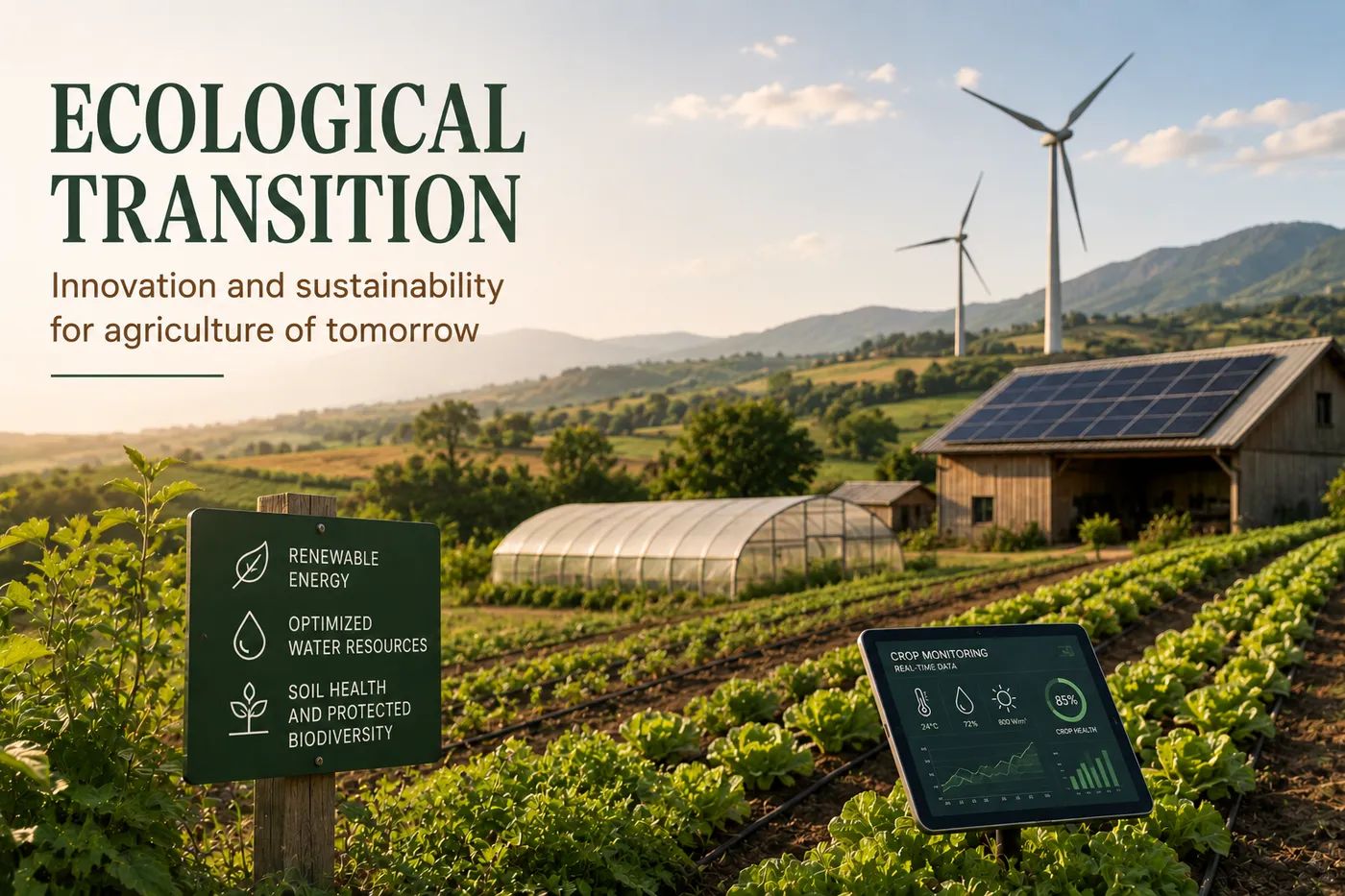
The ecological transition is not merely a political slogan or a programmatic objective, but one of the most complex structural challenges that Europe faces in the 21st century. It stands at the intersection of climate crisis, food security, biodiversity protection, public health, and social equity. In this scenario, agriculture plays a crucial role: on the one hand, it contributes significantly to greenhouse gas emissions, the consumption of natural resources, and the transformation of landscapes; on the other, it holds extraordinary potential to reverse destructive trends, regenerate ecosystems, and become a driving force for sustainability.
Europe, with its 447 million inhabitants and an agricultural system covering nearly 40% of the continent’s surface, plays a decisive role in this process. Over the past decades, the productivist model introduced after the Second World War ensured food security and abundance, but it also generated deep environmental imbalances: soil erosion, nitrate and pesticide pollution, biodiversity loss, and increased vulnerability to extreme climatic events. If the 20th century was the era of intensive agricultural expansion, the 21st century must become the era of reconciliation between production and the environment.
The European regulatory and strategic framework reflects this urgency. The European Green Deal, presented in 2019, introduced binding targets for 2030 and 2050 to reduce emissions, increase energy efficiency, and promote economic circularity. Within this framework, the Farm to Fork Strategy and the Biodiversity Strategy 2030 set specific goals for agriculture: halving pesticide use, reducing chemical fertilizers by 20%, bringing the share of organic farmland to 25%, and protecting at least 30% of European territory with designated conservation areas. These are ambitious goals, requiring a radical shift in farming practices, consumption models, and governance tools.
Yet the ecological transition in agriculture is not a linear process. It entails tensions and contradictions:
- Economic tensions, because sustainable conversion requires high costs in research, innovation, infrastructure, and training.
- Social tensions, because farmers—especially smallholders—fear they will bear the brunt of the sacrifices.
- Cultural tensions, because changing long-standing practices means questioning production and dietary habits rooted in centuries of tradition.
Despite these difficulties, European agriculture today stands at a historic crossroads: either defending an intensive model that has already revealed its limits, or choosing the path of sustainability by valuing the continent’s vast heritage of local knowledge, technological innovation, and cooperative capacity.
Agriculture is not merely a productive sector: it is a social and economic ecosystem that shapes landscapes, structures local economies, and affects people’s health. Every farming choice has repercussions on multiple levels: the type of crop grown determines water use; the application of fertilizers impacts the quality of drinking water; livestock management influences methane emissions; and the configuration of the agricultural landscape conditions the presence of pollinators and overall biodiversity.
In this sense, the ecological transition requires a paradigm shift: no longer agriculture conceived merely as a tool for maximizing productivity, but as a lever of systemic resilience. Resilience to climate crises, pandemics, and geopolitical tensions that threaten supply chains. The experience of the Covid-19 pandemic made it clear that food security cannot be taken for granted: overly long supply chains, dependence on external chemical or energy inputs, and fragile logistics networks put Europe’s food sovereignty at risk.
A distinctive feature of the European continent is its extraordinary climatic and cultural diversity: from the Scandinavian tundra to the Mediterranean coasts, from the German plains to the French vineyards, each area has developed specific agricultural models. This heterogeneity, far from being an obstacle, constitutes the basis for a widespread laboratory of experimentation. What works in the Netherlands in terms of hi-tech greenhouses can inspire water efficiency models in Italy or Greece; France’s agroforestry practices can engage in dialogue with Andalusia’s climate-resilient crops; Germany’s energy cooperatives provide examples for rural communities in Central and Eastern Europe.
This plurality of experiences is precisely what makes the European transition unique: not a monolithic model to be imposed, but a mosaic of practices to be harmonized and disseminated, while respecting territorial specificities.
If the agriculture of the past had the mission of feeding a hungry Europe, the agriculture of the present must feed a conscious Europe. Conscious that food is not only biological nourishment, but also culture, landscape, identity, and future.
The European Regulatory and Policy Framework
The ecological transition in agriculture cannot be understood without analyzing the political and regulatory framework that underpins it. The main instrument of European agricultural governance is the Common Agricultural Policy (CAP), created in 1962 with the goal of ensuring food security and stable farm incomes. Today, the CAP is structured around two main pillars:
- Direct payments and market measures, which support farmers’ incomes
- Rural development, which finances projects in innovation, diversification, and environmental protection
The most significant novelty of the latest reform (2023–2027) is the introduction of eco-schemes: additional payments for those who adopt environmentally friendly farming practices, such as reducing chemical inputs, creating biodiversity strips, or implementing advanced crop rotations. The idea is to transform subsidies from passive instruments into levers of change.
In 2019, the Commission launched the European Green Deal, a comprehensive action plan to make Europe climate-neutral by 2050. Within this framework, agriculture is seen as both part of the problem (responsible for about 10% of the EU’s greenhouse gas emissions) and part of the solution (through its potential for carbon sequestration and ecosystem regeneration).
The Green Deal is articulated through specific strategies, two of which directly impact agriculture:
Farm to Fork Strategy (2020) — This strategy aims to make food systems fair, healthy, and sustainable. Its main targets for 2030 are a 50% reduction in the use and risk of chemical pesticides, a 20% reduction in fertilizers, a 50% reduction in antibiotic sales in livestock farming, and an increase to 25% of agricultural land dedicated to organic farming.
EU Biodiversity Strategy 2030 — This strategy requires at least 30% of European land and seas to be placed under protection and calls for the restoration of at least 10% of agricultural land into high-biodiversity landscape features (hedgerows, ponds, ecological buffer zones).
Alongside these general strategies, the EU has adopted or is developing a series of sectoral regulations:
- Soil Strategy (Soil Health Law, 2023): introduces minimum standards for soil fertility protection and against land degradation.
- Sustainable Use of Pesticides Regulation (SUR): sets binding limits and promotes integrated pest management.
- Circular Economy Strategy: encourages the reuse of agricultural by-products, composting, and food waste reduction.
- Organic Farming Action Plan: supports the growth of the organic sector through communication campaigns, targeted funds, and scientific research.
Despite the clarity of the objectives, the regulatory translation of the ecological transition faces several critical challenges:
- Excessive bureaucracy: many farmers complain that eco-schemes require disproportionate amounts of documentation, discouraging participation.
- Disparities among Member States: economic and infrastructural differences make it difficult to apply uniform rules.
- Global market pressures: while the EU raises its standards, agricultural products from outside Europe enter the market under looser rules, undermining the competitiveness of European farms.
- Political resistance: some governments have slowed down objectives considered too costly, generating tensions between the Commission, the Parliament, and the Member States.
Despite its limitations, the European policy framework remains one of the most advanced in the world. Europe seeks to exert international regulatory influence through what is known as the “Brussels effect”: by setting high standards that effectively become a global reference, since anyone wishing to export to the EU must comply.
Emerging Agro-Environmental Models
The European ecological transition takes concrete shape in the emerging agro-environmental models being developed across territories. These models are not simply technical innovations, but genuine development paradigms, capable of redefining the relationship between humans, nature, and agricultural production.
1. Regenerative Agriculture — Regenerative agriculture is perhaps the most emblematic model of this new phase. It does not stop at reducing damage but aims to restore soil fertility, biodiversity, and natural cycles. Key practices include no-till or minimum tillage, cover crops, complex crop rotations, and integration with livestock through controlled grazing. These practices not only improve soil health but also increase carbon sequestration capacity.
2. Agroforestry and Integrated Systems — Agroforestry involves integrating crops and trees, recreating more complex and resilient ecosystems. Trees not only produce fruit, timber, or biomass, but also provide shade, reduce evaporation, enrich the soil, and create habitats for wildlife. Alongside agroforestry, integrated systems bring together farming and livestock within a circular framework: crop residues feed animals, while manure becomes fertilizer or a source of biogas.
3. Advanced Organic and Ecological Farming — Organic farming has become a well-established alternative model, but in recent years a qualitative leap has occurred: from “commercial organics” to “regenerative organics” and ecological intensification. The latter aims to replace chemical inputs with natural processes—the use of beneficial insects for biological control, the application of mycorrhizae to improve nutrient uptake, and the design of agricultural landscapes that foster functional biodiversity.
4. Precision Farming and Digitalization — Digitalization is transforming agriculture into a high-tech sector. Through IoT sensors, drones, satellite imagery, and artificial intelligence algorithms, it is now possible to monitor the condition of crops and soil in real time. This enables targeted irrigation, variable-rate fertilization applying nutrients only where needed, and phytosanitary monitoring allowing timely and localized interventions.
5. Vertical Farming and Urban Agriculture — Vertical farming represents a radically new model, bringing food production into cities and reducing the distance between producers and consumers. In multi-level greenhouses controlled by automated systems, vegetables can be grown without pesticides and with water consumption up to 90% lower than traditional crops.
6. Circular Approaches and the Bioeconomy — Circular agriculture aims to turn every by-product into a resource: using agricultural residues to produce energy (biogas, bioethanol), composting urban food waste to be reintroduced as fertilizer, and reusing treated wastewater for irrigation.
7. Multifunctionality and Ecosystem Services — Emerging models do not aim solely to produce food, but also to provide ecosystem services: biodiversity protection, carbon sequestration, water management, and landscape conservation. Some payment for ecosystem services (PES) schemes are now taking shape: farmers are rewarded not only for what they produce but also for the environmental benefits they deliver.
8. Integration of Tradition and Innovation — One of the most interesting aspects of European agro-environmental models is their ability to hybridize innovation and tradition. Ancient practices such as terracing, rainwater harvesting, or medieval crop rotations are being reinterpreted through modern technologies. In this sense, the ecological transition is not a clean break from the past, but a regeneration of knowledge.
Good Practices Across Europe
Europe is an agricultural mosaic made up of profoundly diverse landscapes, climates, and cultures. This very variety is its strength: there is no single model, but rather a constellation of practices which, adapted to local contexts, are contributing to making the ecological transition a tangible reality.
Northern Europe: Innovation and Circular Economy
In Northern Europe, agriculture has always had to contend with harsh climates and short growing seasons. The Netherlands represent a unique laboratory: despite their small territory, they are among the world’s largest agricultural exporters. This result is due to hi-tech greenhouses, genuine artificial ecosystems regulated by light, temperature, and humidity sensors. In these structures, water use is reduced by 90% compared to traditional cultivation, and waste is reintroduced into production cycles.
In Denmark, attention is focused on livestock, historically responsible for high methane emissions. Through research programs on animal feed and manure management, Denmark has succeeded in reducing emissions from the livestock sector while at the same time producing renewable energy through biogas. In the Scandinavian countries, bioenergy derived from agricultural and forestry residues meets much of rural energy demand, while “food forests” are spreading—spaces designed to mimic a natural ecosystem while being rich in edible species.
Southern Europe: Water and Climate Resilience
In the Mediterranean basin, the main challenge is water. In Andalusia, agricultural cooperatives have adopted advanced drip irrigation systems equipped with sensors that measure soil moisture, reducing water use by up to 40% without penalizing yields. In Sicily and Calabria, farms are introducing avocados, mangoes, and papayas—genuine climate responses where citrus groves suffer from drought. In the Greek islands, universities and producers are collaborating to select grape varieties resistant to heat and salinity, safeguarding both culture and tourism.
Central Europe: Community and Cooperation
In Bavaria and Rhineland, many farms have installed photovoltaic and biogas plants, producing energy not only for themselves but also for neighboring villages—genuine “energy communities.” In Austria and Switzerland, sustainability is linked to landscape, with agricultural buildings constructed with natural materials to blend harmoniously into the Alpine environment. In Eastern European countries, the cooperative model is experiencing a renaissance: groups of small producers join forces to create local markets, short supply chains, and direct distribution systems.
Challenges and Critical Issues
If these virtuous examples show the promising face of Europe’s agro-environmental transition, one cannot ignore the structural, cultural, and economic difficulties that slow change.
Many farmers struggle to embrace new practices. The ecological transition is not only technical, but involves a real change in mindset. Abandoning intensive practices consolidated over decades means taking risks, often without guarantees of immediate success. In the first years, for example, regenerative agriculture can lead to yield declines before the soil recovers.
Sustainability has a cost. Digital sensors, drones, climate-controlled greenhouses, advanced irrigation systems—all require significant investments. In the wealthier and more organized regions of Northern Europe, these costs can be absorbed thanks to cooperatives, access to credit, and research networks, but in Southern and Eastern Europe the risk is that of a two-speed transition.
European agriculture operates in a globalized market. While the EU raises its environmental standards, products imported from countries with less stringent rules enter the market at competitive prices. This creates an evident tension: how to reconcile sustainability with competitiveness?
Ultimately, the real challenge is to build trust. Trust between institutions and farmers, who must feel supported and not left alone; trust between producers and consumers, who must recognize the value of sustainable food; trust between Member States, which must avoid imbalances and divisions.
A New Rural Paradigm
The ecological transition does not concern only agricultural techniques or EU regulations: it is profoundly reshaping the very meaning of Europe’s rural areas and the role that agriculture plays in society. To speak of a “new rural paradigm” means to imagine a future in which agricultural areas are no longer seen as mere places of production, but as multifunctional spaces, custodians of biodiversity, energy, culture, and social cohesion.
The new paradigm focuses on multifunctionality. A farm is not only a producer of food, but also provides ecosystem services (soil protection, water regulation, carbon sequestration), contributes to landscape quality, sustains rural tourism, and keeps local gastronomic culture alive. This expansion of functions makes the farmer not only an economic operator, but also a custodian of the land.
The European rural future will be increasingly community-oriented. Experiences of community supported agriculture (CSA) have multiplied, where citizens do not simply buy products but support the costs of farms in advance, sharing risks and benefits. This model creates bonds of trust and transparency, shortens supply chains, and restores value to food as a common good.
A decisive element of the new paradigm will be generational renewal. Today, the average age of European farmers is over 55, and only a minority are under 35. Without young people, the transition risks stalling. The future of the countryside will not be made up only of “traditional” farmers, but of hybrid figures: young people combining agriculture and tourism, agriculture and technology, agriculture and education.
European agriculture does not produce only food, but also cultural landscapes that define the identity of the continent: the vineyards of Burgundy, the olive groves of Tuscany, the lavender fields of Provence, the agricultural terraces of the Canary Islands. The new paradigm recognizes the value of landscape as an integral part of sustainability.
Looking ahead, the new European rural paradigm can be summed up in three words: integration, resilience, beauty.
- Integration: of farming practices with ecosystems, of science with tradition, of city with countryside.
- Resilience: the ability to face climate, economic, and geopolitical crises without collapsing, thanks to diversified systems and strong communities.
- Beauty: understood not only as landscape aesthetics, but as harmony between humans and nature, as a value that gives meaning to life in rural areas.
Conclusions
At the end of this journey, it is possible to draw a provisional balance of the ecological transition in agriculture in Europe. EU policies outline ambitious objectives, emerging agro-environmental models open innovative pathways, and concrete examples in the territories demonstrate that change is already underway. But the challenges remain significant and the road ahead is long.
European agriculture is rooted in a historical heritage of millennia-old landscapes, traditional practices, and crops that have shaped cultural identities and communities. The ecological transition is therefore not an optional choice, but a historical necessity. It represents the possibility of combining tradition and innovation, conservation and development, environment and society.
From the analysis emerge some fundamental pillars that define the new European agricultural horizon:
- Sustainability as a guiding principle — No longer productivity at all costs, but the ability to produce while respecting the planet’s ecological limits.
- Rural multifunctionality — The countryside is not only a place of food production, but also of biodiversity, culture, energy, and social cohesion.
- Community participation — The transition is not a top-down process, but a movement that must involve farmers, citizens, institutions, and consumers.
- Scientific and technological innovation — Digital tools, sustainable biotechnologies, the bioeconomy, and applied research are fundamental levers to face new challenges.
- Social equity — Ecological but inequitable agriculture cannot be called sustainable. Social justice, inclusion, and dignity of labor must remain central.
If the last century was that of food security, the 21st century will be that of ecological security. It is no longer enough to produce food: it must be produced in such a way that land, water, and air remain available for future generations. Europe has already begun down this path, transforming its countryside into a laboratory of sustainability. The destiny of European agriculture does not concern only farmers: it concerns us all, because on it depend the landscapes we inhabit, the food we eat, and the climate we live in.